
Shutdown of Tihange 1: Between Industrial Regret and Political Gamble
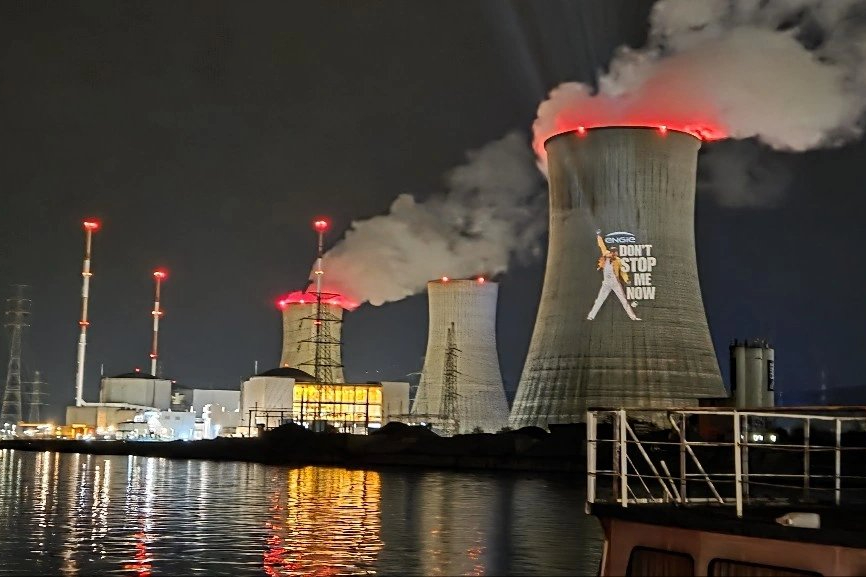
The shutdown of Tihange 1, amid a reshaping of Belgium’s energy policy, has sparked a wave of reactions. Many denounce a decision that is difficult to understand, just as the nuclear sector is being relaunched. A look back at a typically Belgian paradox.
At exactly 11:21 p.m. on Saturday, September 30, 2025, Belgium disconnected the Tihange 1 reactor (962 MW) from the grid. In operation since 1975, it had reached fifty years of service. Engie-Electrabel placed the site under post-operation status, supervised by the Federal Agency for Nuclear Control (FANC), ahead of dismantling scheduled to begin in 2028.
Over the past decade, nearly €600 million have been invested to extend its lifetime. Yet, the shutdown was confirmed by the federal government: any further extension would have required a complete safety review and new investments. The reactor was shut down “in full safety,” according to the FANC.
This closure illustrates a paradox: only a few months earlier, Belgium had repealed the 2003 Nuclear Phase-Out Law, reopening the door to a partial revival of the sector. An emblematic unit goes dark—just as the nuclear relaunch begins.
“We’re heading for disaster”: The anger of Huy’s mayor
In Huy, the closure of Tihange 1 feels like an economic earthquake.
Mayor Christophe Collignon (Socialist Party) deplores a decision “difficult to understand” and fears a budgetary shock for the municipality, deprived of nearly €10 million per year in taxes linked to the plant.
On X (formerly Twitter), he criticized the lack of long-term vision: “At midnight this Wednesday, Tihange 1 will be shut down. A decision with heavy consequences for Huy: successive closures bringing financial losses, adding to the poor choices of federal and Walloon governments that are putting local authorities in danger…” — [@ChristopheHuy, September 30, 2025]
😡 Ce mercredi minuit, Tihange 1 sera mis à l’arrêt. Une décision lourde de conséquences pour Huy: des fermetures successives entraînant des pertes financières, qui s’ajoutent aux mauvais choix des gouvernements fédéral et wallon qui mettent les pouvoirs locaux en danger… pic.twitter.com/i2BE47SGkR
— Christophe Collignon (@ChristopheHuy) September 30, 2025
Interviewed by Belga, he deemed it incoherent to “shut down a safe and profitable plant while repealing the phase-out law,” before concluding: “We’re heading for disaster.”
“Rebuilding nuclear capacity”: The federal stance
The next day, Energy Minister Mathieu Bihet (Reformist Movement) placed the shutdown within a broader strategy: to rapidly rebuild low-carbon, dispatchable capacity in order to ensure security of supply and control electricity prices.
Speaking on Café sans filtre (LN24 / LN Radio) on October 1, he said he had met with the operator and co-owners to discuss the technical and economic consequences of the closure.
According to RTL info, discussions are also underway on a possible extension of Tihange 1, as well as Doel 2.
The daily L’Echo noted that this sequence fuels debate between a definitive end and a potential new nuclear agreement, with Tihange 1 at the center of post-shutdown discussions.
“A nonsense for Belgium”: The industry’s reaction
The Belgian Nuclear Forum (BNF) deplored the closure of Tihange 1, “a unit in which €600 million have been invested over the past ten years.” The organization sees it as “a political decision made years ago” that “no longer makes sense in today’s context.”
The BNF underlined the immediate loss of around 1 GW of low-carbon dispatchable capacity for the Belgian power system.
The nuclear sector calls it a “missed opportunity”: the shutdown of a depreciated, safe, and decarbonized assetcomplicates both electricity cost control and winter peak management.
“A major political inconsistency”
The May 2025 repeal of the 2003 Nuclear Phase-Out Law reopened the door to a partial revival of the sector—just as Tihange 1 was being shut down.
For many in the industry, this sequence embodies a contradiction: revival rhetoric on one hand, closure of a historic unit on the other.
The government has also confirmed it is in talks with the operator about possible additional lifetime extensions for Tihange 1 and Doel 2.
A Belgian turning point
The shutdown of Tihange 1 symbolizes the split within Belgium’s energy policy—a federal state reviving nuclear power after having banned it, a cautious operator, impacted municipalities, and a still-divided public opinion. ■
By Maximilien Struys (Sfen)
Image: Projection on the Tihange plant by opponents to its closure, September 30.