
Livret A, LDDS, LEP: French savings mobilised to finance the EPR2 programme
Regulated savings in France will contribute to financing the new nuclear programme. Mobilised via the savings fund of Caisse des Dépôts, the Livret A will take part in financing the six future EPR2 reactors. This is a key step to secure the financial structure of the programme, for which the final investment decision is expected at the end of 2026.
For the first time, French savings, notably through the Livret A, will contribute to financing the new French nuclear programme. “60% of the total amount of the programme will be financed by the Savings Fund of the Caisse des Dépôts,” stated the Élysée during the fifth Nuclear Policy Council, held on 12 March 2026. The subsidised loan, guaranteed by the State, will be arranged by Banque des Territoires. The savings fund centralises a significant share of regulated savings, notably the Livret A, the Sustainable and Solidarity Development Savings Account (LDDS) and the Popular Savings Account (LEP). Until now mainly used to finance social housing, this fund will, for the first time, support an energy project.
Outstanding savings in Livret A and LDDS now exceed €615 billion. The cost of the new nuclear programme represents only a small fraction of the available funds. At the end of December 2025, EDF estimated the maximum construction cost of the six EPR2 reactors at €72.8 billion (2020 value). Spread over 25 years, this construction will require annual financing of €3.6 billion. Roland Lescure, Minister for the Economy, Finance and Industrial, Energy and Digital Sovereignty, stated: “The Savings Fund mobilises French savings for very long-term investments of general interest and will, in this capacity, contribute to financing the new French nuclear programme.”
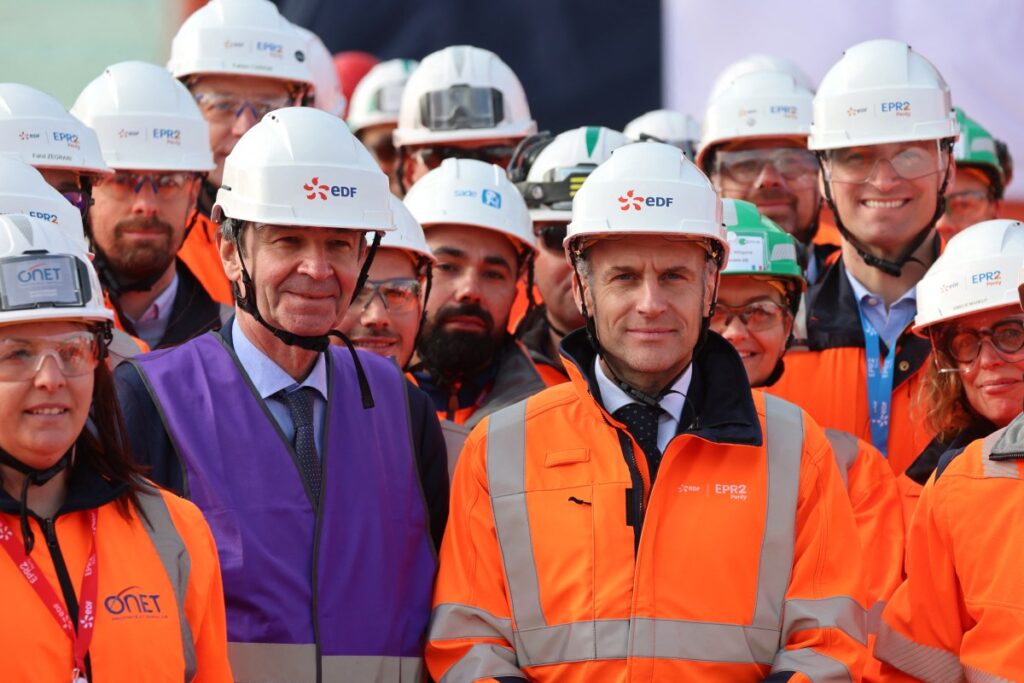
The President of the Republic, Emmanuel Macron, during his visit to the Penly construction site on 14 March, recalled why this investment is strategic for France: “We will not succeed in winning the battle for climate, competitiveness and sovereignty without nuclear power.” Banque des Territoires confirmed in its press release: “This financing will contribute to the construction of six EPR2 reactors, thereby strengthening France’s energy sovereignty, supporting the competitiveness of the French economy and accelerating the decarbonisation of the electricity mix.” Olivier Sichel, Chief Executive Officer of Caisse des Dépôts, added that “Caisse des Dépôts is once again putting French savings at the service of the French people and future generations.”
Final investment decision expected at the end of 2026
In return, “the Council also confirmed the objective of securing the final investment decision by EDF’s Board of Directors before the end of 2026, for first commissioning by 2038.” The project is on track: several key milestones have already been reached. The construction programme has been audited by the Interministerial Delegation for New Nuclear (DINN). Following this assessment, EDF committed to meeting these objectives and to implementing the audit recommendations by the end of 2026, under the close supervision of the DINN. On the regulatory side, since February, the Multiannual Energy Programme now formally includes the construction of six EPR2 reactors. Only one final step remains: approval by the European Commission of the State aid mechanism supporting the programme. The French government began discussions with Brussels at the end of 2025. ■
By Floriane Jacq, Sfen
Image: Visit by President Emmanuel Macron to Penly on 12 March 2026. © LUDOVIC MARIN / POOL / AFP