
EPR2, back end of the fuel cycle, fast reactors… the five developments from the Nuclear Policy Council
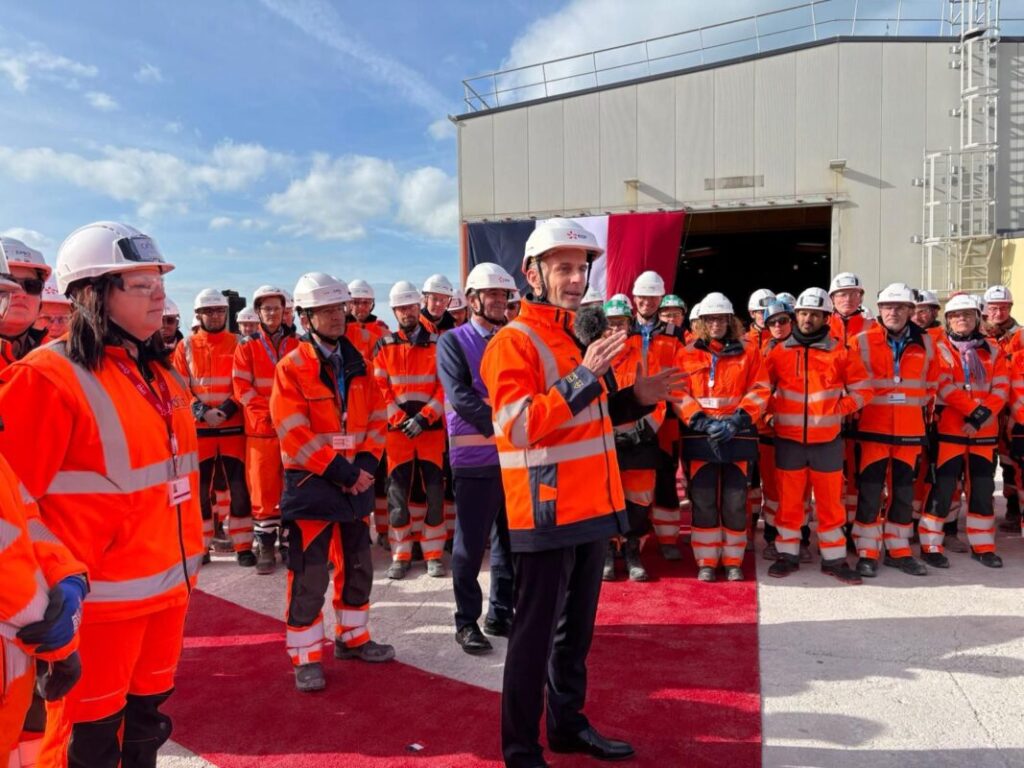
Meeting on 12 March 2026 after a presidential visit to the Penly site, the Nuclear Policy Council (CPN) clarified several major directions of French nuclear strategy: adjustment of the EPR2 cost estimate, confirmation of its financing framework, progress on the back end of the fuel cycle, revival of a fast reactor programme, and renewed support for small reactor projects. RGN looks back at the five main announcements from this meeting.
On 12 March 2026, after a visit to Penly, Emmanuel Macron chaired a Nuclear Policy Council meeting (CPN, the fifth in five years). It enables the Executive to set and clarify the main directions of national nuclear policy. RGN looks back at the five key takeaways from this CPN.
1. The EPR2 cost estimate to be adjusted
The CPN provided an opportunity to review the EPR2 cost estimate, validated by EDF’s Board of Directors in December 2025. The utility estimates the maximum cost of the country’s first three pairs of EPR2 reactors at €72.8 billion (2020 value). EDF’s cost estimate was audited by the Interministerial Delegation for New Nuclear (Dinn) at the beginning of 2026. This work was presented during the CPN, although it has not yet been made public. “The Council asked EDF to implement the identified recommendations by the end of 2026 and to report on them as part of the monitoring carried out by the Dinn,” the statement specifies. “EDF teams are committed to implementing the recommendations made by the Dinn as part of its audit,” commented Bernard Fontana, Chairman and Chief Executive Officer of EDF, in a LinkedIn post.
2. French savings mobilised
The CPN also enabled the Executive to “confirm the main principles and key parameters of the financing and regulation framework for the EPR2 programme.” Thus, the subsidised State loan covering 60% of the total amount of the programme was validated by the Élysée. Until now, the government had said that the amount would cover “at least 50%” of the cost of the six EPR2 reactors. This loan will be put in place by Banque des Territoires and will mobilise “the resources of the Savings Fund, which centralises a significant share of regulated savings products (Livret A, LDDS and LEP),” Caisse des Dépôts specified in a statement. Mentioned since 2023, this is the first time that the government has confirmed the mobilisation of French people’s savings to finance new nuclear.
However, the CPN does not mention the 40-year contract for difference. While the final investment decision for the EPR2 programme is still expected in 2026, with first commissioning targeted around 2038, the government is calling on the relevant departments to finalise discussions with the European Commission in order to obtain approval for State aid. “EDF Group teams and all industrial partners are mobilised to deliver the EPR2 programme in compliance with the requirements set in terms of safety, security, quality, schedule and cost,” Bernard Fontana stressed in his LinkedIn post.
3. Back end of the fuel cycle: financing agreement to be validated in 2026
“The Nuclear Policy Council also welcomed the agreement in principle reached between Orano and EDF to secure progress on the programme until the final investment decisions,” the statement explains. In this context, the Executive asked for the financing agreement arrangements to be finalised by the end of 2026 “in order to guarantee the commissioning of the first phase of the project by 2040.” This first phase consists of building two spent fuel storage pools, a new plutonium materials storage facility, as well as the new recycled fuel fabrication plant, “Melox 2”.
It will be followed by a second phase, comprising the construction of a third storage pool as well as a new spent fuel reprocessing plant: La Hague 2. The CPN also confirmed the “Grand Chantier” label for the back-end-of-the-fuel-cycle programme, in order to accelerate and simplify procedures and requirements. “In practical terms, for Orano, this confirms our future investments to modernise and adapt fuel cycle plants over the long term, while building the industrial tool of tomorrow that will be able to succeed the current La Hague and Melox facilities,” noted Nicolas Maes, Chief Executive Officer of Orano, in a LinkedIn post.
4. A new fast reactor to begin construction in 2030
The CPN announces “the launch of a new ambitious programme for closing the nuclear fuel cycle.” It is indeed highly ambitious, since it involves launching a four-year study phase to design these facilities based on national feedback, and then considering, by around 2030, the start of construction. The Council does not appear to be closing off any options, since it aims to “mobilise all stakeholders (project owners, research, emerging players).” However, the statement also refers to national feedback, which suggests Phénix, Superphénix or Astrid. Ultimately, this perspective carries a strong ambition: “to move away from natural uranium imports by around 2100.”
5. France 2030: new phase for SMRs
As announced by President Emmanuel Macron during the Nuclear Energy Summit in Paris on 10 March, the CPN confirmed State support via France 2030 for the startups Calogena and Jimmy. The two French companies dedicated to nuclear heat production are therefore entering the second phase of the “innovative nuclear reactors” call for projects. Calogena, which had received €5.2 million in subsidies for the development of its 30 MWth reactor, carried out a €100 million capital increase, of which €48 million comes from the State. For Jimmy, which had received initial support of €32 million, the funding round resulted in additional financing of €80 million, half funded by public funds. The selection of the first winners of phase 2 marks a new step in public support for French SMR projects. ■
By Simon Philippe, Sfen
Image: Visit by President Emmanuel Macron to Penly on 12 March 2026. © EDF/Élysée