
[Decoding] The Cost of the New EPR2 Nuclear Program: A Few Orders of Magnitude
The launch of the EPR2 nuclear reactor construction program, involving six units, represents a major investment currently estimated at €67 billion, a figure that can be difficult to grasp. To provide perspective, the French Nuclear Energy Society (Sfen) offers a clear comparison by measuring this sum against other major public and private investments essential to France’s energy transition.
The proposed law on “National Energy Planning and Regulatory Streamlining in the Energy Sector,” introduced by Senator Gremillet, is being debated in the National Assembly as of Monday, June 16. This legislation notably aims to enshrine the launch of the EPR2 program into law. Simultaneously, Energy Minister Marc Ferracci is expected to publish the new Multi-Year Energy Program (PPE-3) by the end of the summer.
The current PPE-3 draft sets targets for energy consumption and production in France for the 2025–2030 and 2030–2035 periods. This framework will guide public and private investments over the short, medium, and long term across key sectors such as buildings, transportation, industry, and energy. According to the Institute for Climate Economics (I4CE), climate-related investments surpassed €100 billion in 2022, but should increase by €58 billion per year from 2024 to 2030 [1], equivalent to roughly 5.5% of GDP, to stay on track with decarbonization goals. This is particularly challenging as the national budget faces tight constraints: following a €50 billion fiscal adjustment in 2025, the government has announced an additional €40 billion of budget tightening in 2026.
Within this context, parliamentary debates are expected to focus on the scale of required investments across various sectors. For the general public, such massive sums can be hard to comprehend. Cognitive science shows that the human brain struggles to conceptualize very large numbers—even with visual aids, the difference between one million and one billion is abstract. Because these figures have no direct reference point in everyday life, they remain elusive. The Sfen has compiled comparative data to help contextualize the cost of building new reactors within the broader landscape of France’s energy transition.
Key facts about the EPR2 reactor investment program
The PPE includes the revival of nuclear energy in France, with several major investments, including the construction of six EPR2 reactors at Penly, Gravelines, and Bugey. The Nuclear Policy Council (CPN) met on March 17, 2025, to review the progress of the EPR2 program and requested that EDF present a binding estimate, including cost and timeline, by the end of the year. A provisional estimate dated late 2023, published by the French Court of Auditors [2] in January 2025, put the overnight construction cost (i.e., excluding interest during construction) at €67.4 billion in 2020 euros.
EDF had already declared to the Senate in late 2023 that it was continuing to optimize the construction schedule and supplier contracts. The CPN has now tasked EDF with intensifying its efforts to control both cost and schedule, and to provide a definitive estimate.
Spread over approximately 25 years, the investment would require annual capital expenditures of around €3.5 billion.
The current financing structure, as discussed by the Nuclear Policy Council, involves EDF carrying the investment with a zero-interest government loan covering at least half the cost. This makes it a private investment, though the state budget will still bear the cost of interest subsidies during the construction phase.
Comparing EPR2 to Other Major Energy Transition Investments
To fuel public debate, it is helpful to compare the EPR2 costs with other large-scale public or private expenditures, especially those relevant to the energy transition or general government spending. The following table outlines examples of annual “sovereign” expenditures for 2024:
| Sovereign Expenditures | Amount (€) | % of GDP |
|---|---|---|
| Pensions [3] | 388.4 billion | 13.8% |
| Social Security [4] | 640 billion | 21.9% |
| Domestic Education Spending [5] | 180.1 billion | 6.8% |
How Much Will the Energy Transition Cost Over the Next 15 to 30 Years?
The energy transition will require massive, yet necessary investments—far less costly than inaction. A delayed-transition scenario from ADEME forecasts losses of 1.5% of GDP by 2030 and 5% of GDP by 2050 [6].
Within this, the electricity system plays a central role. According to RTE’s “Energy Futures 2050”, total investment needed to decarbonize the French power sector is estimated at €750–1,000 billion by 2060, or €20–25 billion per yearon average.
Examples of announced projects include:
| Project | Estimated Cost | Stakeholders | Funding Source |
|---|---|---|---|
| Modernization of the national grid (2022–2040), including offshore wind connections | €100 billion (of which €37 billion for offshore wind) | RTE | TURPE(electricity network access tariff) |
| Upgrade of public electricity distribution grid and additional capacity for renewables | €96 billion (including €53B for energy transition and €10B for renewable integration) | Enedis | TURPE |
What Are the Relevant Orders of Magnitude for Annual Expenditures?
To better understand the annual investment requirements of the EPR2 program, it is useful to compare them with other yearly expenditures made by various economic stakeholders—both public and private.
-
France’s Fossil Energy Imports
France’s annual fossil fuel import bill has fluctuated between €50 billion and €110 billion in recent years, depending on market prices [9]:
| Fossil Fuel Source | 2021 Spend (€2022) | 2022 Spend |
|---|---|---|
| Natural Gas | €14 billion | €47 billion |
| Crude Oil Imports | €15 billion | €31 billion |
| Refined Products and Biofuels | €10 billion | €27 billion |
-
Private and Public Investment in Renewable and Recovery Energy Sources
In 2021, companies, households, and public authorities invested a total of €14.4 billion in renewable and recovery energy sources (excluding offshore wind) [10].
The main categories of investment were distributed as follows:
| Renewable Energy Type | Investment |
|---|---|
| Heat Pumps | €6.5 billion |
| Solar PV | €2.8 billion |
| Onshore Wind | €1.8 billion |
| Hydropower | €720 million |
-
Annual Public Spending from the State Budget
Each year, the French government allocates budgetary spending to support the energy sector.
| Program | Amount |
|---|---|
| MaPrimeRénov’ | €4 billion (2021 & 2022) |
| Renewable energy subsidies | €4.6 billion (2025); up to €12 billion/year by 2030 |
| EV Purchase Subsidies | €700 million (2025) |
| Energy Price Shield (gas/electricity) | €10.5 billion (2022) |
What Are the Orders of Magnitude for Major Infrastructure Programs?
A first step is to compare the €67 billion cost of the EPR2 program with other large-scale government-funded infrastructure programs in recent years. These figures also refer to overnight costs (i.e., excluding financing expenses).
| Project | Cost | Sector |
|---|---|---|
| France 2030 Plan (2021–2030) | €54 billion | Innovation and industrial transformation |
| France Très Haut Débit (2020–2025) | €20 billion | Nationwide digital infrastructure |
France Has Also Made Significant Investments in Large-Scale Infrastructure Projects:
- In the Transport Sector:
| Project | Cost | Objective |
|---|---|---|
| Grand Paris Express (2012–2026) | €36.1 billion | Expand public transit in the Paris region |
| High-Speed Rail Bordeaux–Toulouse (2024–2032) | €14.3 billion | Improve mobility in the southwest |
-
Defense Sector
| Project | Cost (2014 prices) | Objective |
|---|---|---|
| Rafale Program (1980–today) | €46.4 billion | 286 fighter jets with equipment, spares, and simulation centers |
A Serious Investment, But One That Deserves Perspective
The €67 billion (2020) estimated cost of the six-reactor EPR2 program must be taken very seriously. It represents a major financial commitment—not only for the nuclear industry and EDF, but for the nation as a whole. However, it should also be put into perspective.
In light of the broader investment needs of the energy transition, this project falls within a comparable order of magnitude to other strategic infrastructure initiatives. Moreover, it offers significant long-term benefits, including:
-
Sustained low-carbon electricity supply
-
Enhanced energy sovereignty
-
Secured long-term power generation capacity
-
Economic benefits via investment, local jobs, and industrial competitiveness
That said, such a commitment requires rigorous project management. Success depends on industrial excellence, as emphasized by the Nuclear Policy Council and championed by EDF’s new CEO, Bernard Fontana, before parliament. It is not only about using each euro wisely—but also about preserving the credibility of French nuclear expertise, both domestically and in Europe. ■
By Floriane Jacq (Sfen), with Valérie Faudon and Ludovic Dupin
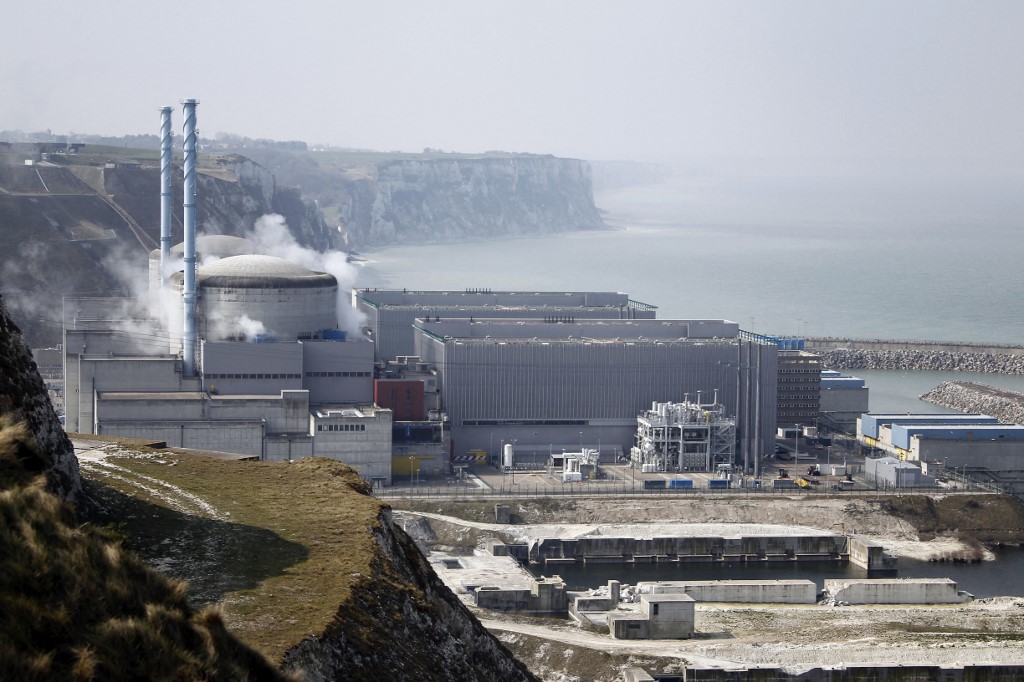
Image: Penly Nuclear Power Plant, where two EPR2 units will be built – © EDF
[1] 2023 Edition of the Climate Finance Overview – au1912.pdf
[2] Clarifications from Sfen on the French Court of Auditors’ Report Regarding the EPR Sector
[3] Pensions: €30 Billion Deficit by 2045, French Court of Auditors | vie-publique.fr
[4] 2024 Social Security Financing Act (PLFSS) | vie-publique.fr
[7] €100 Billion Plan to Modernize the RTE Power Grid
[9] France’s Energy Balance in 2022
[10] Investment Spending in Renewable Energy | Key Figures for Renewable Energy 2024
[11] France Relance Report – Volume II: MaPrimeRénov’ Summary, 2024
[14] Electricity and Gas Price Shield During the 2021–2025 Crisis | Connaissances des énergies
[16] France Très Haut Débit Plan (Ultra-Fast Broadband) | Arcep
[19] 2025 Draft Budget Bill: Defense – Armed Forces Equipment | French Senate