
COP30: Three Key Takeaways for Nuclear Energy
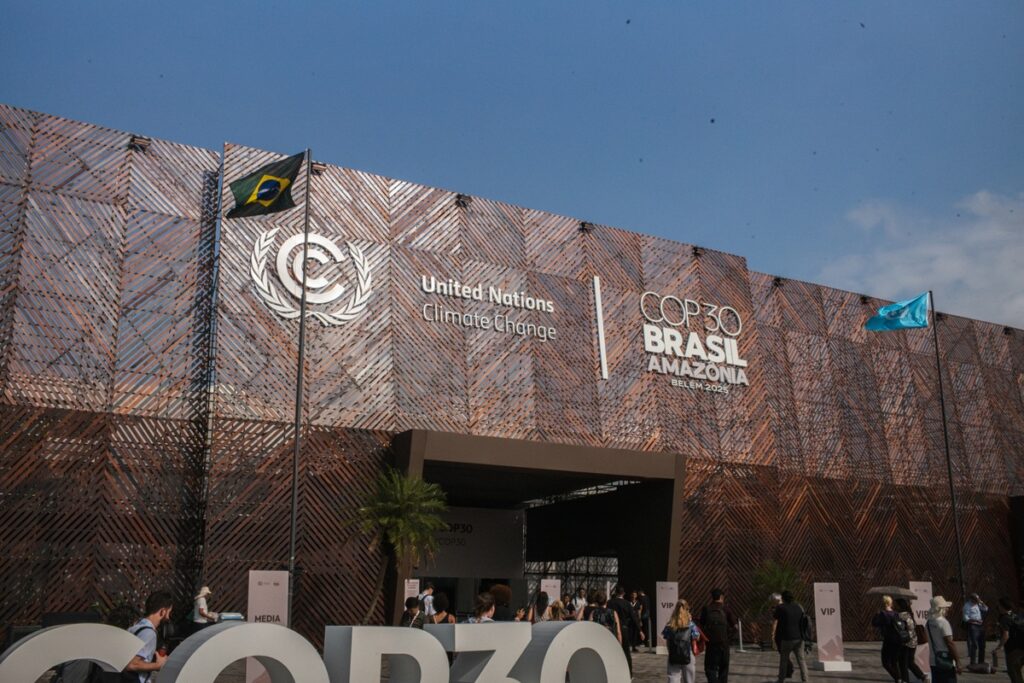
COP30 was held in Belém (Brazil) from 10 to 21 November, against a backdrop of two consecutive years of record global temperatures and persistently rising greenhouse gas emissions. These mounting climate pressures were compounded by strained international relations, driven by conflicts and diverging visions of the world’s energy future, making climate negotiations even more complex.
The 30th edition of the UN Climate Conference aimed to revise national commitments, protect communities from climate impacts, secure climate finance, preserve forests, gradually phase out fossil fuels, and promote inclusion and climate justice. Brazil’s Minister of the Environment, Marina Silva, stressed that it is essential to achieve “alignment on the climate emergency ahead of COP30.”
One of COP30’s main goals was to reassess the commitments outlined in the nationally determined contributions (NDCs), in order to strengthen collective climate action. In recent years, nuclear energy has gained significant ground in climate negotiations, particularly since COP28 in Dubai, where nuclear power was mentioned for the first time in the final agreement and where around twenty countries pledged to triple global nuclear capacity—a sine qua non condition for achieving carbon neutrality.
While fossil fuel phase-out was at the center of this year’s negotiations, with mixed results (see box below), three key messages emerged for nuclear energy:
More and more countries are committing to tripling nuclear capacity by 2050
The number of countries supporting the declaration to triple nuclear capacity by 2050 has now reached 33. Rwanda and Senegal announced their endorsement during COP30.
Recognizing that industrialization cannot rely solely on intermittent sources such as solar and wind, Rwanda has chosen to anticipate its future needs by integrating civil nuclear power into its energy mix. “President Kagame understood early on the need for a credible energy mix. Nuclear naturally emerged as part of this logic,” explains Lassina Zerbo, President of Rwanda’s Atomic Energy Board. Rwanda is focusing on small modular reactors and microreactors capable of providing autonomous, continuous electricity to remote areas, hospitals, or industrial facilities—a solution particularly suited to Africa’s challenges, where reliable energy access remains a major barrier to development.
Senegal, still largely dependent on fossil fuels for electricity, is also launching its nuclear programme. It will begin with a research reactor to train scientists and engineers in fields such as nuclear medicine, agriculture, and materials science. Over the longer term, the country plans to deploy a small modular reactor as part of its “Senegal 2050” strategy.
Two additional financial institutions commit to supporting nuclear tripling
Alongside these national initiatives, Stifel Financial Corp and the Canadian Imperial Bank of Commerce (CIBC) announced that they are joining the “Tripling Statement of Support by Financial Institutions.”
This declaration was first launched in September 2024 during New York Climate Week. Fourteen financial institutions and more than 140 industrial companies affirmed the essential role of civil nuclear projects in transitioning to a low-carbon economy. They also expressed support for long-term objectives to expand global nuclear energy production and develop the entire nuclear industry to accelerate clean electricity generation for the energy transition.
Although COP30 demonstrates increasing global support, many challenges remain. Sama Bilbao y León, Director General of the World Nuclear Association (WNA), summarised the situation clearly:
“The pathway to tripling nuclear capacity is open, but it requires bold, pragmatic, and visionary leadership. Governments must act now, and the industry must deliver commitments and collaborate with civil society. A cleaner and more resilient future is within reach with nuclear energy.”
Towards an unprecedented synergy between nuclear and renewable energy
During COP30, Women in Renewable Energy (WiRE) and the Nuclear for Climate initiative (N4C) signed a joint declaration supporting the path to carbon neutrality. The declaration emphasises that “to achieve carbon neutrality, stable policies and predictable investment frameworks—including all clean energy sources—are indispensable.”
It also recalls that carbon neutrality will require mobilizing all available energy solutions. A collective and coordinated approach is essential. Ultimately, achieving carbon neutrality will depend on the ability of stakeholders to collaborate and pool their efforts. ■
Box: The Mixed Outcome of COP30
On 22 November, the international community adopted the core elements of the Belém Political Package. The text does not include the proposed roadmap for phasing out fossil fuels, which had been announced at the opening of the conference by Brazilian President Lula. This omission disappointed 80 countries, including Colombia, the most climate-vulnerable island states, and the European Union.
At the same time, the document highlights the global progress made over the past decade, “including rapid technological advances and falling costs, as well as record levels of renewable energy capacity and clean-energy investments.” In other words, while the agreement remains silent on fossil fuels, it showcases the positive momentum already underway in low-carbon sectors.
On adaptation, however, the decision introduces a major commitment. It “calls for efforts to triple adaptation financing compared to 2025 levels by 2030.” This could amount to as much as 120 billion dollars per year. These funds are intended to help elevate roads, reinforce buildings against storms, and prepare agriculture for droughts.