
Doel 2: A Quiet Shutdown That Reshapes Belgium’s Energy Balance
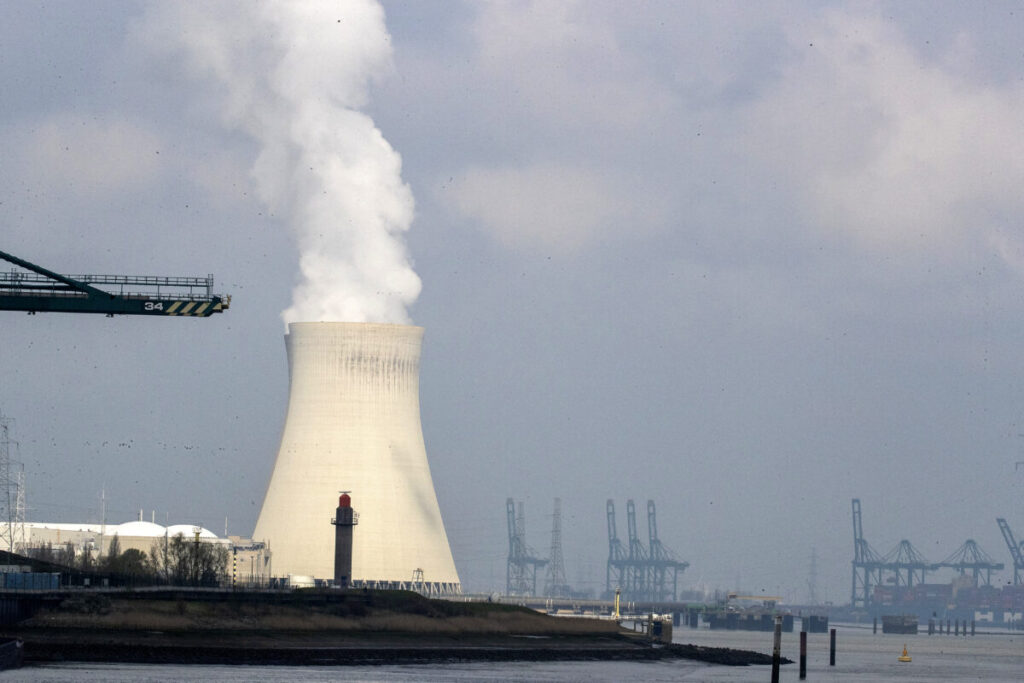
The Doel 2 reactor was permanently shut down on 30 November, without noise or controversy, fifty years after entering service. The fifth nuclear closure in three years in Belgium, this discreet shutdown nonetheless marks a strategic turning point: as dispatchable capacity contracts while demand and electrification continue to rise, the very balance of the electricity system is expected to weaken by 2035.
The Doel 2 reactor was definitively shut down on 30 November, fifty years after being connected to the grid. The fifth nuclear unit to be taken offline in three years, it has been retired without triggering major controversy. Yet this withdrawal comes at a critical moment for Belgium, as its dispatchable capacity shrinks while electricity demand and electrification accelerate.
The end of a first-generation reactor
Commissioned in 1975, Doel 2 belonged to the oldest generation of Belgian nuclear units. Originally designed for a forty-year lifetime, it received a ten-year extension in 2014. Engie, its operator, confirmed the shutdown in compliance with the Belgian regulatory framework. The company stated that the reactor is now entering a post-operation phase including fuel removal, circuit decontamination and dismantling preparation.
Doel 2 adds to an already long list: Doel 3 (2022), Tihange 2 (2023), Doel 1 (February 2025) and Tihange 1 (October 2025). Only Doel 4 and Tihange 3 now remain to provide Belgium’s nuclear generation. The closure of these older units reflects evolving safety requirements: first-generation reactors can no longer be brought in line with today’s standards for resistance to external hazards or seismic criteria.
Despite its age, Doel 2 accumulated a significant volume of low-carbon electricity. According to the Belgian nuclear sector, the unit represents several decades of dispatchable power whose fossil-fuel equivalent would have generated substantial emissions.
A growing challenge for the 2030s
The shutdown of Doel 2 does not create an immediate risk for the 2025–2026 winter. Belgium’s grid operator, Elia, has several levers:
-
the recent commissioning of a gas-fired power plant in Flémalle, with capacity comparable to Doel 2;
-
the integration of around 200 MW of stationary batteries;
-
the Belgian capacity remuneration mechanism, designed to attract new dispatchable units.
In the short term, these measures are sufficient to maintain system balance. But the underlying trend is clear: Belgium has gone from 6 GW of nuclear capacity in 2022 to around 2 GW today.
In an interview with Belgian media outlet RTL Info, Francesco Contino, professor at UCLouvain and expert in energy systems, noted that the system will need to absorb increased reliance on gas-fired plants as well as a likely rise in electricity imports, particularly from France and the Netherlands.
From the federal government’s side, Energy Minister Mathieu Bihet remains reassuring about the current winter while acknowledging that the 2035 horizon concentrates the major concerns: without new decisions, nearly all Belgian nuclear capacity would be withdrawn by then. Discussions therefore revolve as much around extending Doel 4 and Tihange 3 beyond 2035 as around the possibility of launching a new programme.
In 2024, nuclear power still accounted for 42% of Belgian electricity consumption, but that figure will mechanically decrease. Part of the decline, however, will be offset by imports of electricity generated by French reactors.
A closure that goes unnoticed, but a debate that is taking shape
Unlike the shutdown of Tihange 1 earlier this year, the closure of Doel 2 has sparked neither local mobilisation nor significant political reaction. Official communications confined themselves to recalling compliance with the regulatory schedule, and media coverage remained low-key. Doel 2 thus exits the stage in relative indifference, yet its retirement symbolises a shift in scale: Belgium is rapidly reducing its historical nuclear capacity precisely as its need for dispatchable power grows.
While the short term presents no major risk, the country will, in the coming years, need to arbitrate between life-extensions, new builds, gas, storage and imports to maintain a stable electricity system compatible with its climate targets. ■
By Maximilien Struys (independent)
Image: Doel 2 Nuclear Power Plant, Belgium – ©NICOLAS TUCAT / AF