
Nuclear maintenance: rising costs but EDF regains control, according to the Cour des comptes
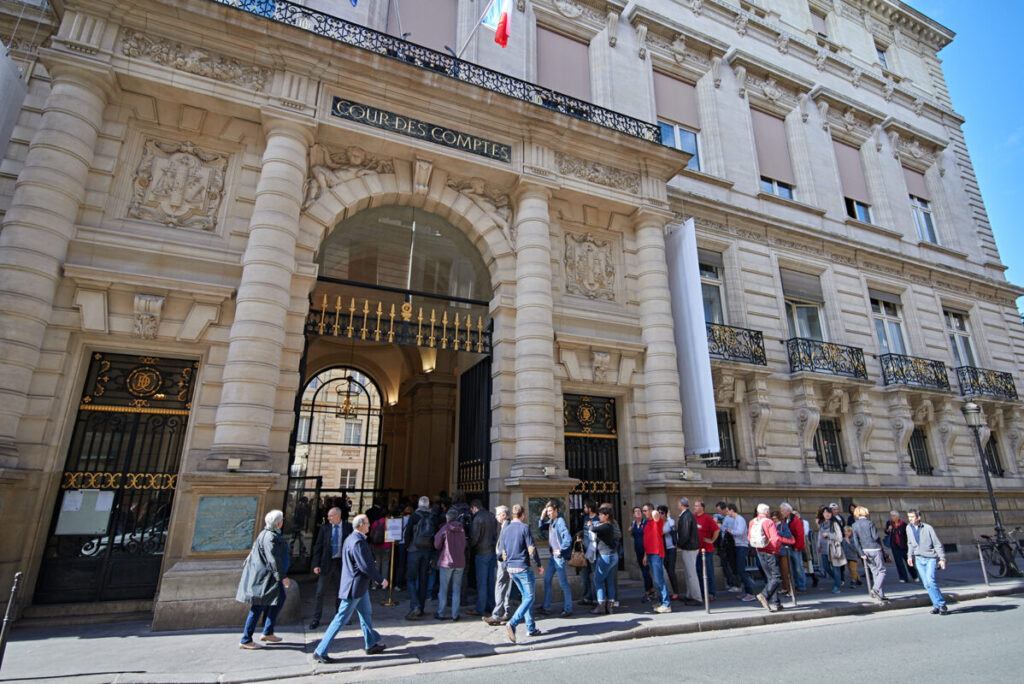
Spending related to the maintenance of the French nuclear fleet has been rising for a decade, going from €5 billion in 2014 to €6.4 billion in 2024. This increase reflects EDF’s efforts to extend the lifetime of its fleet while maintaining a high level of operational performance.
Maintaining the French nuclear fleet is a major challenge. Between 2014 and 2024, the average availability of French reactors fell to 74%, compared with 80% over the previous ten years. At the same time, spending rose by 28% to reach €6.4 billion, including €5.1 billion in direct investments. Although these figures may seem unfavourable to EDF, the Cour des comptes believes the company is on the right track — notably thanks to the success of the Start 2025 programme and progress on the ten-year inspections.
Published on Monday 17 November, the Cour des comptes’ report on the maintenance of the nuclear fleet highlights a continuous increase in EDF’s activities within a shifting context. In fact, the last assessment from the Palais Cambon on this topic dates back to 2014. Since then, France’s nuclear ambitions have changed considerably — from a reactor-closure plan in the Multi-Year Energy Programme (PPE) to the revival of a programme including up to 14 large units. This policy reversal also places EDF in a long-term lifetime-extension logic. And thus a rise in associated maintenance activities.
Crises and challenges
The drop in the fleet’s performance is partly linked to exogenous factors. “Concerns about the quality of certain equipment after excess carbon concentration was discovered in some components in 2016, the COVID-19 pandemic in 2020, and a generic defect due to stress corrosion cracking (SCC) identified at the end of 2021,” are the three major crises EDF has had to face over the last decade.
The group’s response “appeared, in retrospect, each time rapid, appropriate to the situation, and proportional to the security-of-supply stakes and, according to the ASNR, to the safety implications.” Nevertheless, these events resulted in production losses. SCC alone caused a loss of around 90 TWh in 2022, representing “at least 8% of the group’s total turnover” between 2021 and 2024.
Beyond crises, the Cour des comptes highlights three endogenous difficulties explaining EDF’s challenges in fleet maintenance. First, the strengthening of safety requirements, particularly after the Fukushima accident, which logically increased the volume of work. In parallel, “the loss of technical skills within maintenance and operations teams amid significant generational turnover” intensified the pressure. Finally, as France revived its nuclear ambitions, lifetime-extension work for existing units added to the group’s workload.
VD4 on track
All these factors appear in the work carried out for the fourth ten-year inspections (VD4) of French reactors. According to EDF data, the number of important components for protecting radiological-risk-related interests (EIPS) rose from 8,000 during the third periodic review to 17,300 for VD4. “This accumulation, in addition to the weight it places on maintenance operations, can also — paradoxically — impact plant safety, as site managers may struggle to master the intricacy of rules and ultimately react adequately to unforeseen events,” notes the Cour des comptes, calling for a simplification of the General Operating Rules by 2027.
This high level of operational requirements is also driven by the fact that “the initial design lifetime of some equipment was only 40 years.” Logically, this results in higher costs for the ten-year inspections. Between VD3 and VD4, the required investment for 900 MW reactors increased five-fold (to a total of €8.4 billion). However, the workload and costs associated with ten-year inspections should decrease with the launch of the VD4 for 1,300 MW reactors in 2026. The additional cost is expected to be limited to +60% compared with VD3, for a total of €5.2 billion. In parallel, VD5 inspections should be less demanding. “The efforts required of the operator during the VD4 periodic inspections have, in fact, already integrated — in the most critical areas — the prospect of extending reactor lifetimes to 60 years,” emphasises the Cour des comptes.
Start 2025 set to continue
Another positive point from the report: the Start 2025 outage-improvement plan launched in 2019 is considered a success. Before this programme, EDF struggled to meet its outage-performance objectives. “Numerous structural constraints slowed down their proper execution, and the various remediation plans and actions undertaken since 2014 did not produce the expected results,” states the Cour des comptes.
Start 2025 allowed for a real strategic shift by placing the operational performance of the fleet at the core of outage objectives. After a diagnostic and experimental phase, each site established a roadmap in 2022. Since then, “a positive trend has been observed, as evidenced by improvements in nuclear output, average outage duration, and average delay compared to planned outage durations.” In light of these encouraging results, the continuation of the programme, recommended by the Cour des comptes, was approved by EDF CEO Bernard Fontana in his response letter.
In the letter, the chief executive considers that the report “serves as an encouragement to pursue our actions in favour of a nuclear fleet operating at a high level of safety and performance.” He highlights the successes of Start 2025 and the Grand Carénage programme, as well as EDF’s ability to “overcome the COVID-19 pandemic and stress corrosion cracking.” At the end of his letter, Bernard Fontana nevertheless raises a concern regarding increased load-following operations: “This high level of modulation raises technological questions, both in terms of its impact on reactor operation and the resilience of the electrical system.” To be continued: EDF is expected to publish a report on this topic soon. ■