
SMRs/AMRs: France and Europe can still catch up, according to the CRE
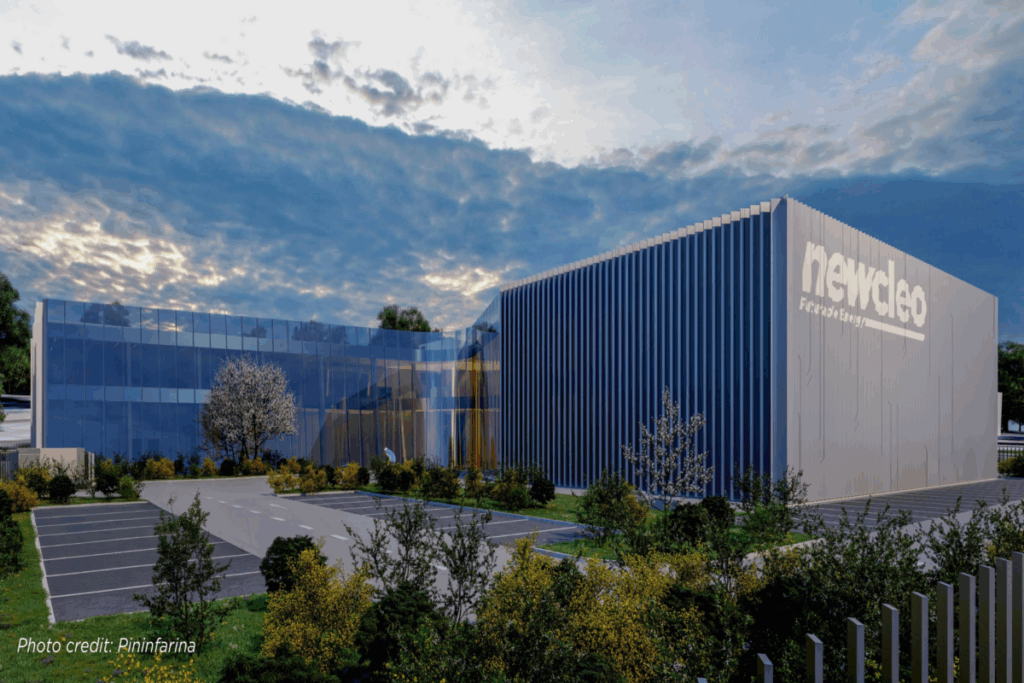
Despite China’s, the United States’ and Russia’s lead in the race for small and advanced modular reactors, the game is not over yet. According to a report from the French Energy Regulatory Commission (Commission de régulation de l’énergie, CRE), published on September 9, France and Europe can still make their mark—provided they mobilize massive public funding, harmonize their regulations, and bet on thermal uses, considered the most promising.
The delay can still be made up. Despite the lead of China, the United States, and Russia, France and Europe can still carve out a place for themselves in the SMR and AMR race—at least if public authorities commit sufficient resources. This is the conclusion reached by the Prospective Working Group of the CRE in its report “The Integration of Small Modular Reactors (SMRs/AMRs) into Energy Systems”, published on September 9.
“The development of SMRs is still in its early stages. Prototyping and industrialization of technologies will be the most critical phases,” said François Lévêque, co-chair of the working group, at the presentation conference. Even though the most advanced SMRs have passed the technological milestone and will likely be marketed in the 2030s, “their competitiveness relies on modularity and economies of scale, which have not yet been achieved,” added Anne-Marie Choho, co-chair of the working group and CEO of Setec.
Money rules
“What explains the lead of other countries over France today is not technology but investment in the prototyping phase,” continued Anne-Marie Choho. The figures are clear: developers’ needs run into billions of euros. While such amounts have already been mobilized in the most advanced countries, notably the United States and China, this is not the case in Europe. Competition between SMR and AMR concepts remains strong.
“The technology chosen will not necessarily be the most efficient,” noted François Lévêque. “But it will become the most efficient because it was the one selected.”
Public support is needed
Private financing alone cannot suffice. The return on investment from the prototyping phase is too uncertain for private players to take it on by themselves.
“Although some European SMR/AMR projects have obtained private venture capital for their initial stage, no investment fund ready to finance the far costlier and lengthier industrialization phase has been identified,” the CRE report stated.
Significant public funding therefore appears indispensable, according to the Prospective Working Group.
“It’s obvious that not all projects will succeed, but this should not be seen as wasted money,” argued François Lévêque. “This is the nature of R&D—failure is part of the process. But each project should provide lessons learned and transferable technologies.”
Substantial funding at national or European level for a few promising projects would help achieve economies of scale within the EU’s 27-member market, while reducing delays and costs. It would also support developers in difficulty, such as Naarea, a French start-up placed under court-supervised reorganization while awaiting new private funds.
“We are approaching a moment of unifying research forces and consolidating certain projects,” analyzed Philippe Stohr, Director of Energy at the CEA (French Alternative Energies and Atomic Energy Commission).
Heat rather than electrons
Another difficulty raised by the report is regulation.
“The minimum scale required to achieve economies of scale is Europe, not France,” the report stressed. “It is therefore essential to harmonize regulations at European level,” emphasized Pierre-Marie Abadie, president of the ASNR (Autorité de sûreté nucléaire et de radioprotection, the newly created French Nuclear Safety and Radiation Protection Authority).
This regulatory and collective awareness must particularly apply to the field of heat. For example, “SMRs are currently penalized by France’s transposition of the European Energy Efficiency Directive,” noted the CRE. French law does not include technological neutrality in its definition of an “efficient” district heating network, preventing nuclear reactors from accessing favorable subsidies and tax schemes, unlike renewable and recovered energy sources.
Yet the report clearly highlights that the most promising applications for SMRs and AMRs in mainland France and in Europe lie in heat production. First, unlike electrons, calories cannot be transported over distances greater than 25 kilometers.
“This constraint is well-suited to small, local production systems,” explained the CRE.
Second, “for the same reactor size, the amount of energy produced as heat is two to three times greater than that produced as electricity,” the Commission added. Heat production therefore enables lower costs per kilowatt-hour and better competitiveness.
A technically addressable demand for decarbonized heat, potentially met by SMRs and AMRs, is estimated at over 80 TWh per year today, and could exceed 100 TWh by 2050. For France in particular, the heat market is especially attractive, given that electricity generation is already largely decarbonized and tensions exist around biomass supply.■