
High-performing nuclear, curtailments, negative prices: lessons from the first half of 2025
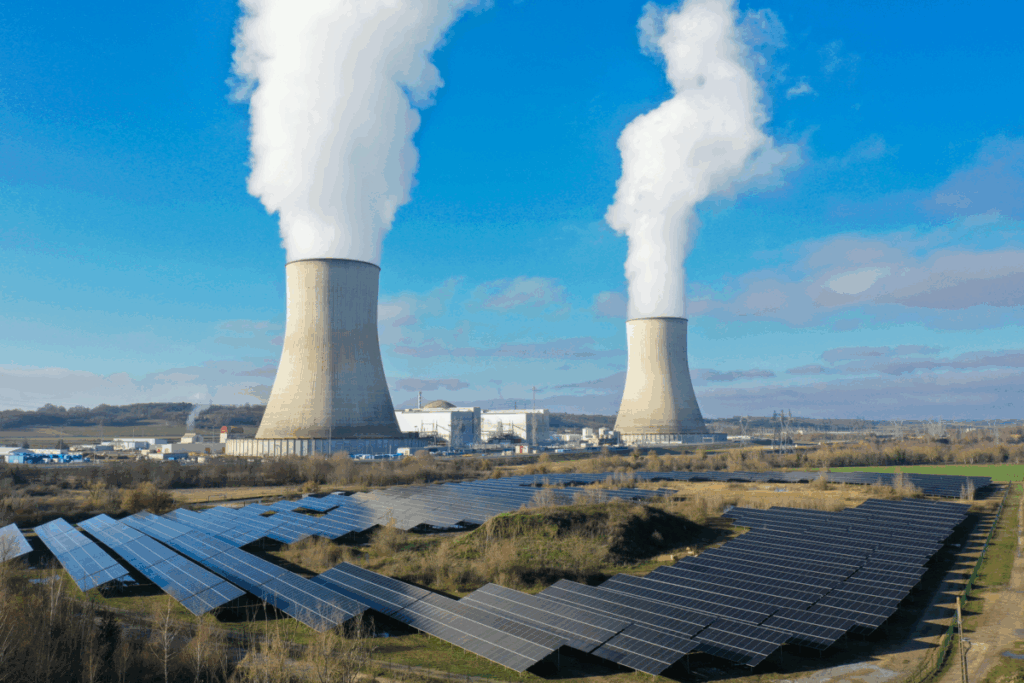
According to RTE’s report for the first half of 2025, France benefited, as in 2024, from exceptional availability of its nuclear fleet, enabling the share of low-carbon electricity to be maintained at 95%. This performance supported electricity exports and offset weather-related impacts that weighed on hydropower and wind.
“The share of low-carbon generation also remained at the historically high level reached in 2024, at 95%.”
This is one of the key findings of RTE’s mid-year 2025 report. That share could have dropped due to unstable weather conditions, which reduced hydropower and wind output. But it was offset by abundant nuclear generation thanks to improved availability of the existing fleet (+2.4% in the first half of 2025).
The first half of 2025 was also marked by a sharp increase in renewable generation curtailments, up more than 80%! Solar drove most of this trend, rising “from 0.4 TWh in the first half of 2024 to nearly 1.2 TWh in the first half of 2025.” Over the same period, “the share of the fleet incentivized to modulate its output remained constant,” the authors note. This increase in renewable curtailment is explained in particular by higher solar production and by the growing number of hours with negative prices.
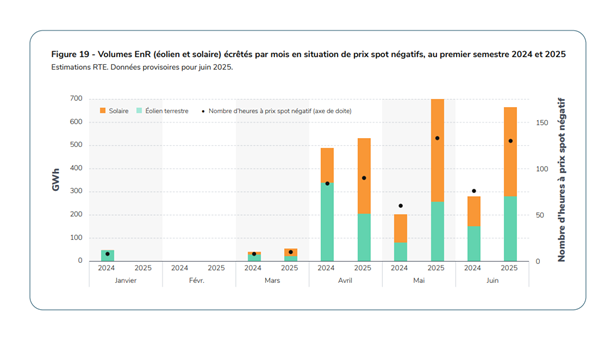
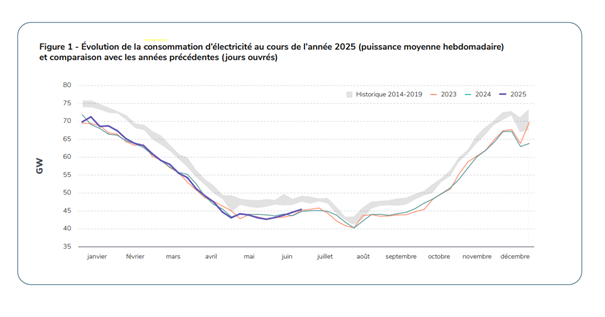
The number of negative price episodes continued to increase in the first half of 2025, reaching 363 hours, or around 8% of the time. This growth is due to the fact that “electricity consumption remained stable.” It is still below its pre-Covid level: 6–7% below the 2014–2019 average.
But a trade surplus in electricity still at record levels
However, this low consumption enabled France to post a strongly positive electricity trade balance throughout the first half of the year, with 37.6 TWh exported. This is the second-highest surplus ever recorded, just behind the first half of 2024. And it is no anomaly: for nearly 20 years, France has regularly exported more electricity than it imports (with 2022 being the sole exception), as the Sfen highlighted in its Nuclear by the numbers section on net exports from 2005 to 2024. ■