
Sfen Awards: welding, modeling, toxicology… discover the 2025 laureates!
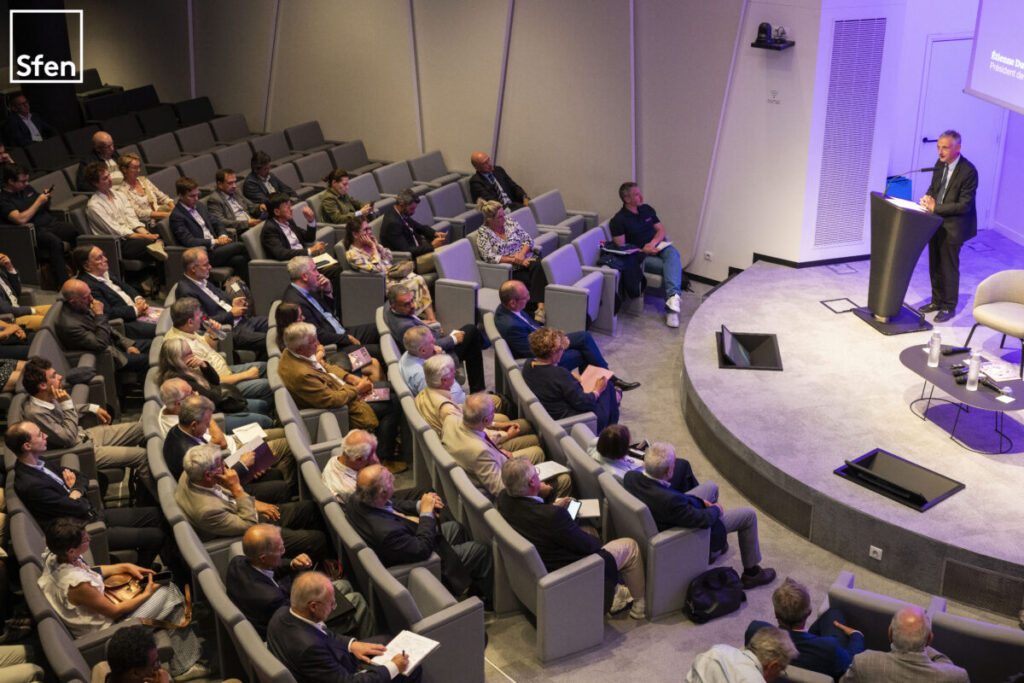
Since 1983, Sfen (French Nuclear Energy Society) has awarded prizes each year to recognize outstanding work, studies, dissertations, or other contributions related to nuclear energy, its industrial applications, and safety. These projects may be scientific, technical, biological, medical, social, or economic in nature. With a new record of 56 applications, discover the 2025 award winners!
The Grand Sfen Prize
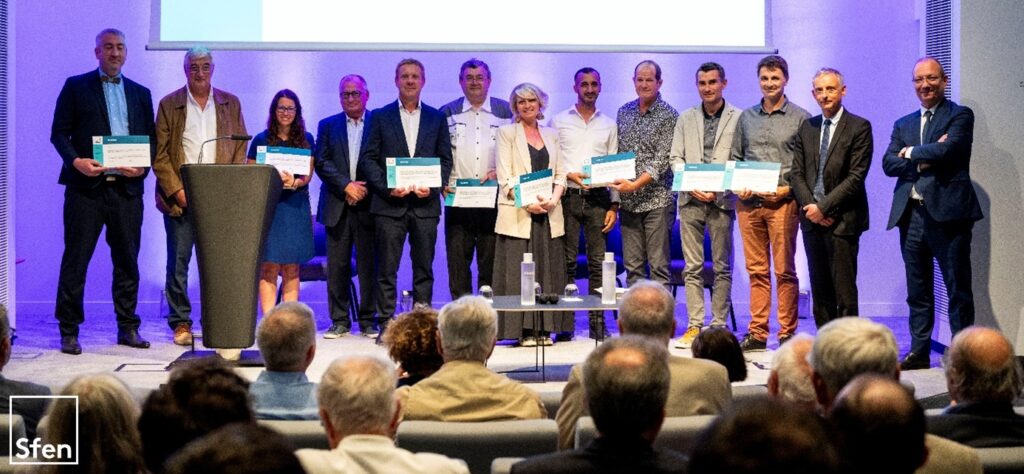
This prize rewards a scientific or technical achievement—individual or collective—related to nuclear energy. The 2025 Grand Sfen Prize was awarded to the team from the IRESNE Institute at CEA Cadarache: Leïla Gicquel, Nicolas Auriac, Sébastien Lefevre, Virginie Benoit, Gwendal Blevin, Ciaran Verdelli, Bruno Morassano, Romain Boccaccio, Benjamin Tardivel, and Christian Latge, for their project: “The Sodium and Advanced Coolants School: a training institution supporting the operation of future reactors, built on 50 years of experience.”
Founded in 1975 to address the specific needs of sodium-cooled fast neutron reactors (SFRs), the Sodium School has trained operators, technicians, and engineers for 50 years in operating sodium installations—particularly experimental loops—handling this liquid metal, and managing its associated risks.
The training program is currently structured around two main tracks: reactor and loop operation, and decontamination–dismantling. It has evolved to integrate modern learning tools without sacrificing hands-on and experimental training. As a unique institution worldwide, the school plays a key role in meeting the objectives set by the French Nuclear Policy Council on March 17, 2025, regarding the revival of fast reactor development and the new SFR concepts supported by France 2030-certified startups.
Special mention: Isabelle Giboire, Benjamin Frasca, Luc Taillard, Christophe Girold, Christophe Lafon, Stéphane Lemonnier, Florent Lemont, Majdi Mabrouk, Rodolphe Magnin, Mickaël Marchand, Karine Poizot, and Aldo Russello for “ELIPSE: an innovative plasma-based mineralization process for radioactive organic liquid waste,”
developed at CEA in collaboration with EDF’s Cyclife and Andra.
Jacques Gaussens Young Researcher Award
This award recognizes a researcher under 35 for significant scientific or technical contributions. The 2025 award was given to Tommaso Barani, researcher at the Multi-fuel Applications Expertise and Validation Laboratory (LEVA), Fuel Studies Department at CEA Cadarache, for his work: “Multi-scale modeling of nuclear fuels for next-generation reactors.”
Tommaso Barani has developed broad expertise in nuclear fuel physics and modeling, working on a wide range of fuels and challenges. Since joining CEA Cadarache, he has focused on analyzing and modeling the behavior of MOX fuel in fast reactors. He also contributed to validating the Germinal fuel code from the Pleiades platform and expanding its application to French SMR projects and low-temperature irradiated MOX fuels. His work has resulted in an impressive output: 28 peer-reviewed publications and over 20 conference contributions.
Jean Bourgeois Thesis Award
This prize recognizes the best PhD thesis in the nuclear field. The 2025 award went to Sandra Barhoum (CEA) for her thesis: “Development of a miniaturized analytical method for studying interactions between radionuclides and biological components in the context of decontamination and dismantling (D&D).”
Defended on April 29, 2024, at Sorbonne University, the thesis was carried out at the Analytical, Isotopic and Elemental Development Laboratory of the Institute for Applied Sciences and Simulation for Low-Carbon Energies (ISAS), within CEA’s Energy Division. Her research falls within the scope of nuclear toxicology. It focuses on understanding, at the molecular level, the biological behavior of plutonium and its biodistribution in the presence of americium. The aim is to reduce uncertainty in committed dose calculations and improve treatment of workers accidentally contaminated during D&D operations. This fundamental research also opens the way for new applications of IMAC (Immobilized Metal Affinity Chromatography) in radiochemistry and the functionalization of miniaturized monolithic supports to isolate other radionuclides.
Special mention: Corentin Reiss for his thesis: “Modeling of boiling flows in nuclear reactors using CFD: application to critical heat flux prediction.”
Technological Innovation Award
Created 10 years ago, this award highlights technological innovations in the nuclear field. It was awarded to Elefthérios Anagnostopoulos, Florian Girardin, and Emmanuelle Verschelde from Intercontrôle for: “Faster and more reliable visual inspections in nuclear plants through AI assistance.”
This innovation improves visual inspection methods via in-house software integrating various Artificial Intelligencemodels. Named F.AI.A (Framatome Artificial Intelligence Analysis), the tool uses deep learning technology to detect defects based on training with annotated component samples. Successfully tested in 2025 at Framatome production sites and in 2024 at EDF nuclear plants, F.AI.A reduces inspection time and, thus, plant maintenance duration. The tool is now being extended to new components, reactor types like BWRs, and potentially to non-nuclear applications.
Special mention: Lionel Gouin, Olivier Guizard, Jérémie Valois, Jules Robin, and Damien Miranda (Onet) for “AI-Assisted Orbital Welding – SOAA.”
Education and Training Award
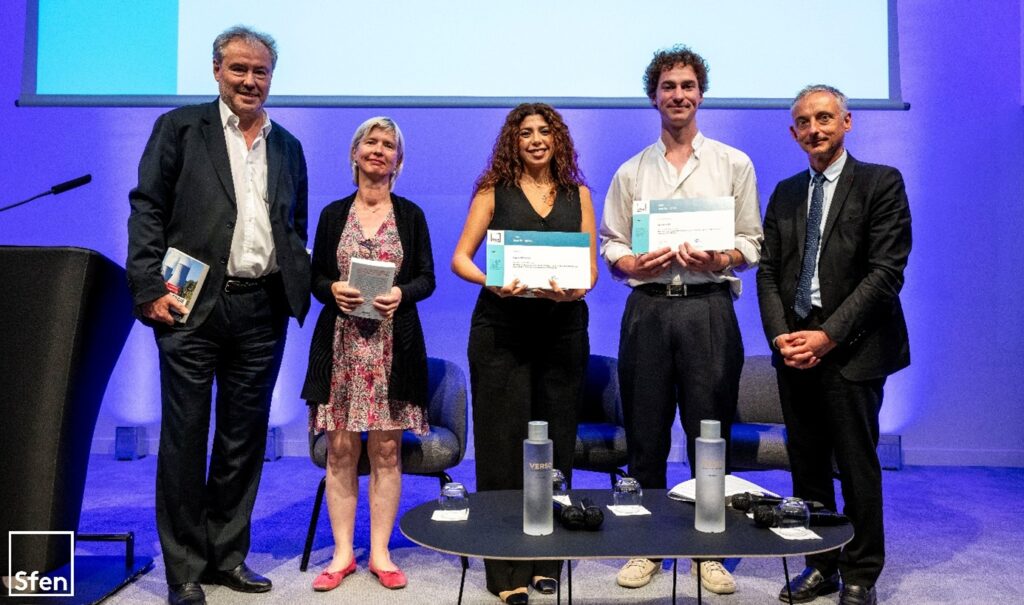
The award was jointly granted to the publications “Materials and Processes for Nuclear Today and in the Future”, coordinated by Fanny Balbaud-Célerier and Céline Cabet, and “CEA Monograph – Structural Mechanics”, coordinated by Ludovic Jason and Stéphane Loubière.
Materials and Processes for Nuclear Today and in the Future
This book aims to provide a global and comprehensive overview of non-fissile materials used in current and future nuclear systems, as well as their manufacturing and assembly processes. The coordinators invited internationally recognized French and foreign experts to contribute to the writing of the book’s ten chapters. It constitutes a valuable resource, both for students in materials science who are not necessarily specialists in the nuclear field, and for scientists, engineers, and researchers involved in nuclear engineering and nuclear R&D. It stands out as a key reference tool for understanding the current and future challenges of the sector.
CEA Monograph – Structural Mechanics
This publication is part of the monograph series from the CEA Energy Division, whose purpose is to provide a complete overview of ongoing research in a given area of nuclear energy—here, structural mechanics. The monograph covers a broad spectrum of topics, ranging from the integrity of main components (such as reactor pressure vessels and containment structures) under extreme conditions (earthquakes, shocks, loss of containment), to coupled phenomena such as fluid–structure interaction or stress corrosion. Without being an academic textbook or a regulatory document, it occupies a unique position at the crossroads of research, engineering, and expertise, highlighting the contributions of R&D efforts across the entire nuclear industry.
The Bertrand Barré Award – Public Communication
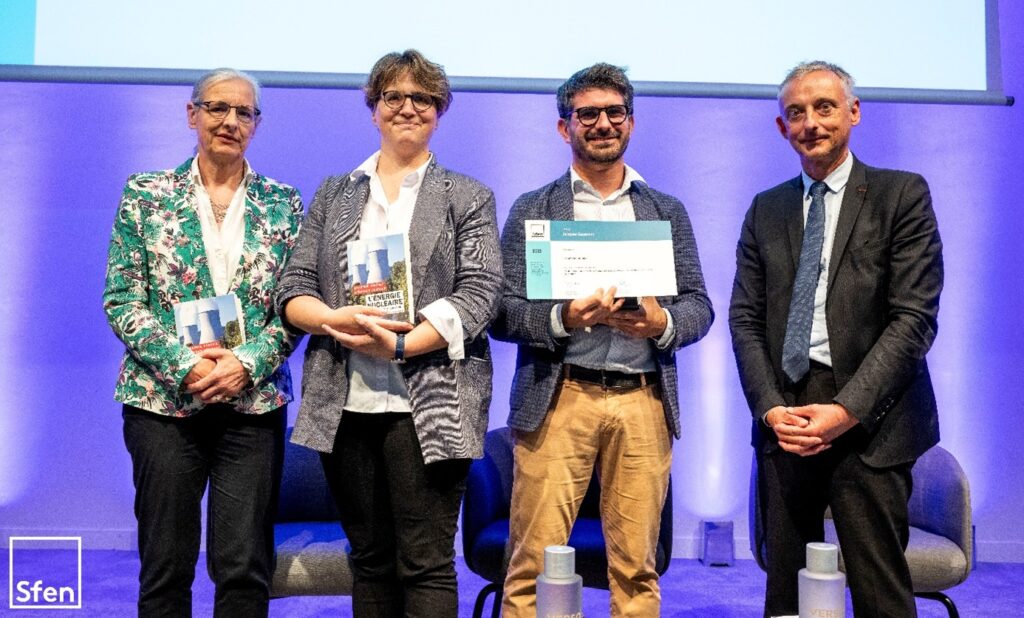
The Bertrand Barré Sfen Award recognizes a work devoted to nuclear energy that effectively contributes to public information. It was awarded to Maxence Cordiez and Stéphane Sarrade for their book “L’énergie nucléaire en 100 questions – Pour un monde en transition” (Nuclear Energy in 100 Questions – For a World in Transition).
This book is part of the “100 Questions” collection from Tallandier Editions, which aims to help the general public better understand the major issues of the 21st century by answering 100 questions. The 100 questions in this volume “Nuclear Energy for a World in Transition” are grouped into 12 major themes covering all aspects of nuclear energy.
It offers a comprehensive and accessible overview of the key issues surrounding nuclear energy—from explanations of fundamental concepts (energy, atom, nuclear reactions, radioactivity, contamination, etc.) to the roles this energy plays in the transition to carbon neutrality, including reactor operations, the fuel cycle, safety and security, and dismantling.
Special mention was given this year to the educational game “Journey of an Atom”, developed by the association Terminus des Sciences, represented by Arnaud Chapon, Pierre Chazoule, Tristan Kamin, Clara Micheau, and Alexis Olivier-Huard. ■
By Philippe Dubuisson, Chair of the Sfen Awards Committee, and the Sfen Team
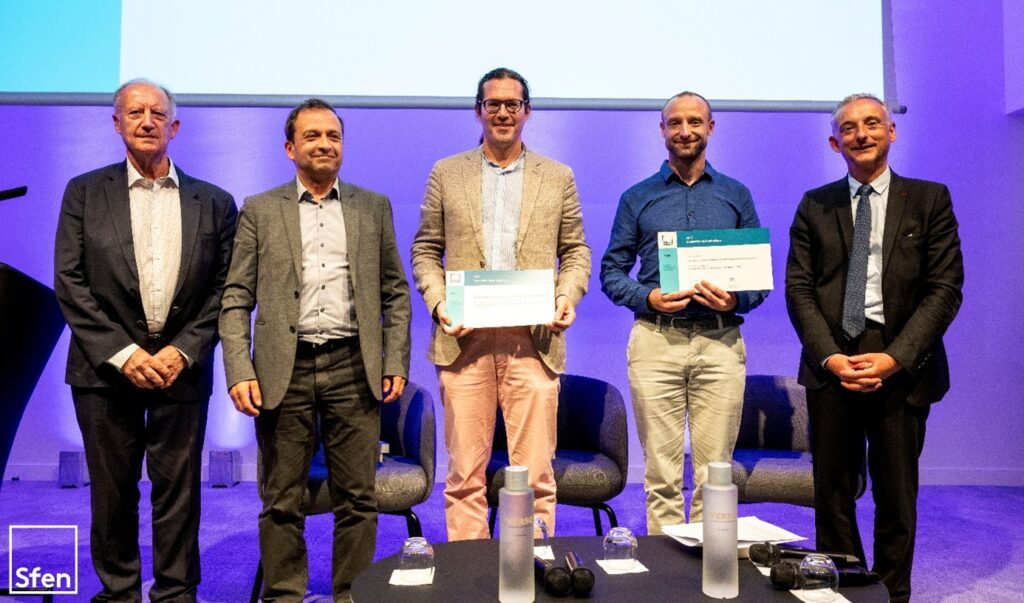
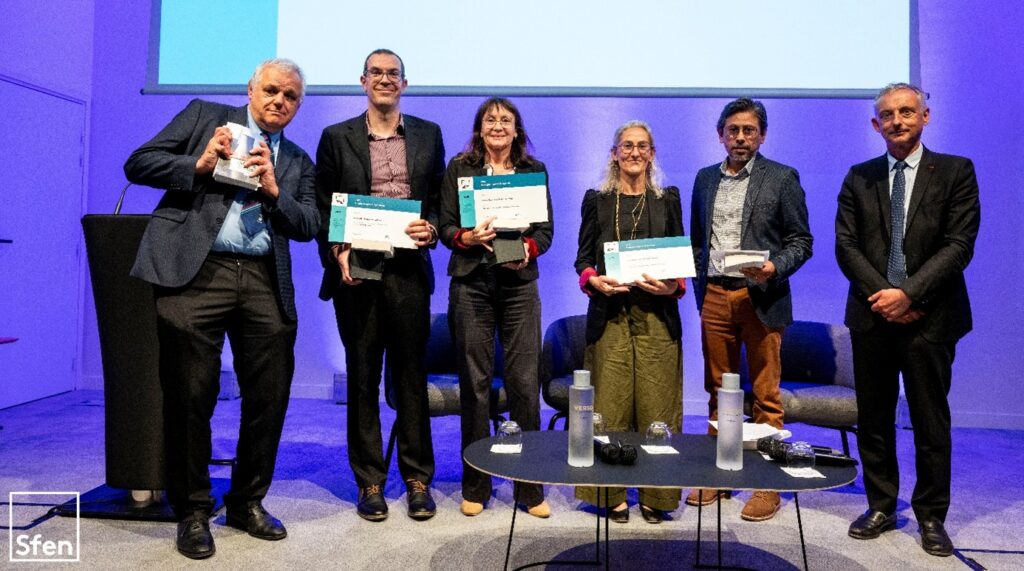
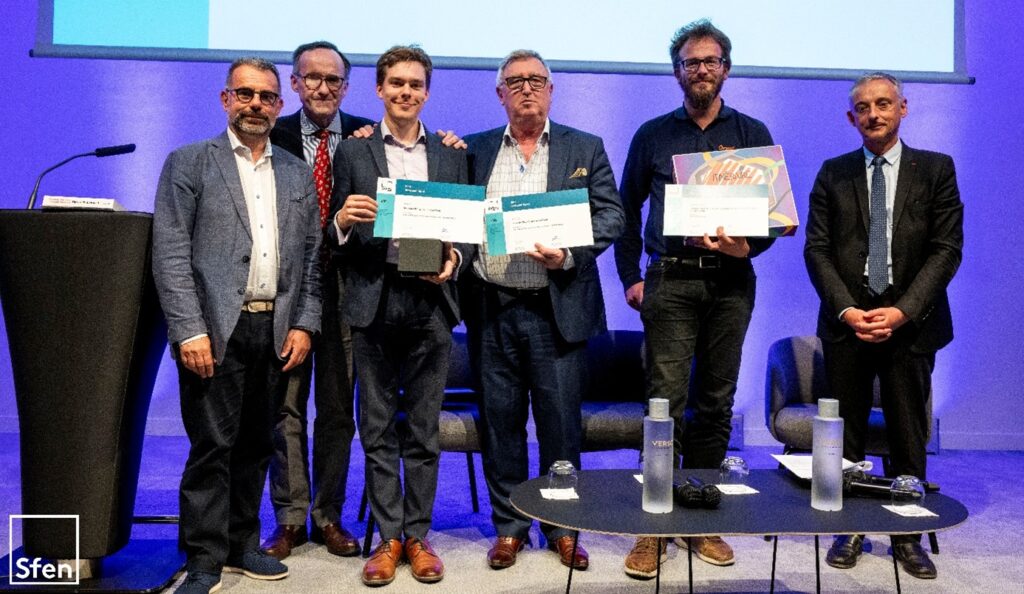
Image: Photo taken during the awards ceremony
Photos ©Sfen