
Europe: A New Consortium to Develop a Lead-Cooled SMR
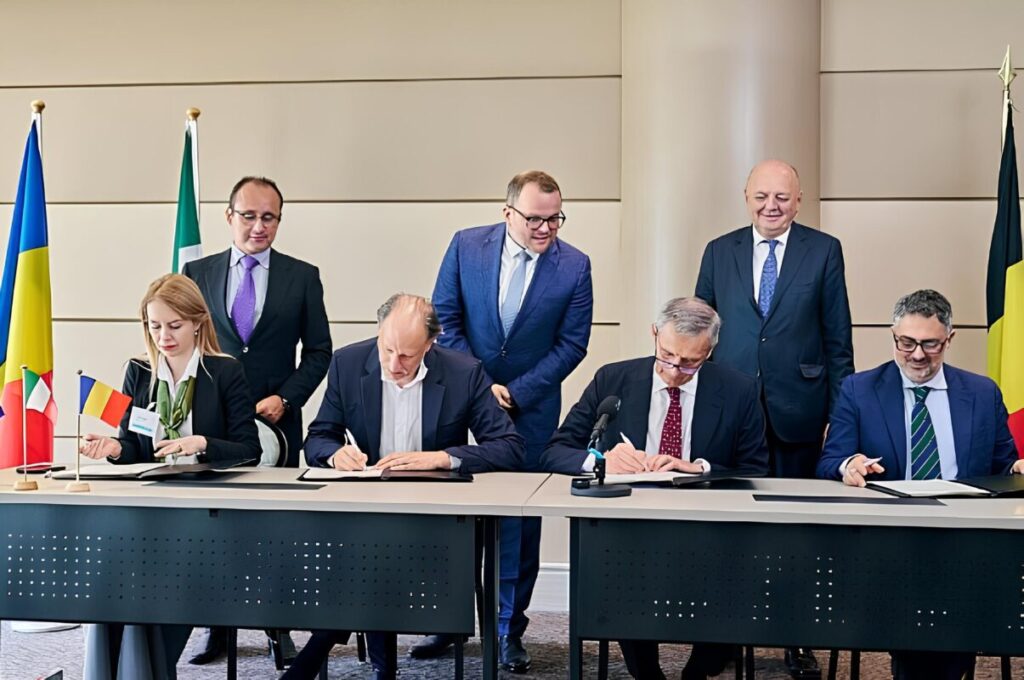
On June 16, 2025, a new European consortium comprising four organizations announced the launch of the development of a new lead-cooled small modular reactor, the EAGLES-300. A first demonstration unit is expected by 2035.
Europe is once again accelerating its nuclear ambitions. A new consortium has been established to develop—and eventually commercialize—the EAGLES-300, an advanced small modular reactor (SMR). The project brings together four European organizations: the Belgian Nuclear Research Centre (SCK CEN), the Italian National Agency for New Technologies, Energy and Sustainable Economic Development (ENEA), the Italian engineering firm Ansaldo Nucleare, and RATEN, Romania’s public organization for nuclear R&D coordination. The agreement was signed during the European Energy Council meeting held on June 16, 2025.
From EU-SMR-LFR to EAGLES-300
Formerly known as “EU-SMR-LFR”, the EAGLES-300 was selected in October 2024 by the European Industrial Alliance on Small Modular Reactors, an initiative aiming to facilitate and accelerate the development of SMR technologies. At that time, the project was already being led by the two Italian entities and the Romanian organization, all of which are recognized for their expertise in lead-cooled reactor technology and engineering. With the signing of the new agreement, Belgium officially joins the initiative, and the reactor receives a new name: EAGLES-300.
The EAGLES-300 is a Generation IV lead-cooled small modular reactor, expected to deliver a power output of approximately 350 MWe. In addition to generating electricity, its designers indicate that it could also serve industrial heat applications and hydrogen production. Like other SMRs, it is based on a modular design, which enables reduced capital investment, shorter construction timelines, and flexible deployment. Notably, it also supports the use of MOX fuel, including from recycled materials, which could reduce radioactive waste volumes and enhance sustainability.
“The reactor runs on MOX fuel, including recycled materials, which will help reduce radioactive waste volumes and improve sustainability,” stated the new consortium.
First Milestone Set for 2035
Development will proceed in two phases. A first facility in Belgium, named LEANDREA, will conduct fuel and materials testing, with the goal of delivering a first demonstration unit by 2035. The second facility, called ALFRED(Advanced Lead Fast Reactor European Demonstrator), will be located in Romania and serve as a platform for the reactor’s commercial deployment. The consortium is targeting global commercialization of the EAGLES-300 by 2039. ■