
Technical Review of Cigéo: ASNR Validates Post-Closure Safety
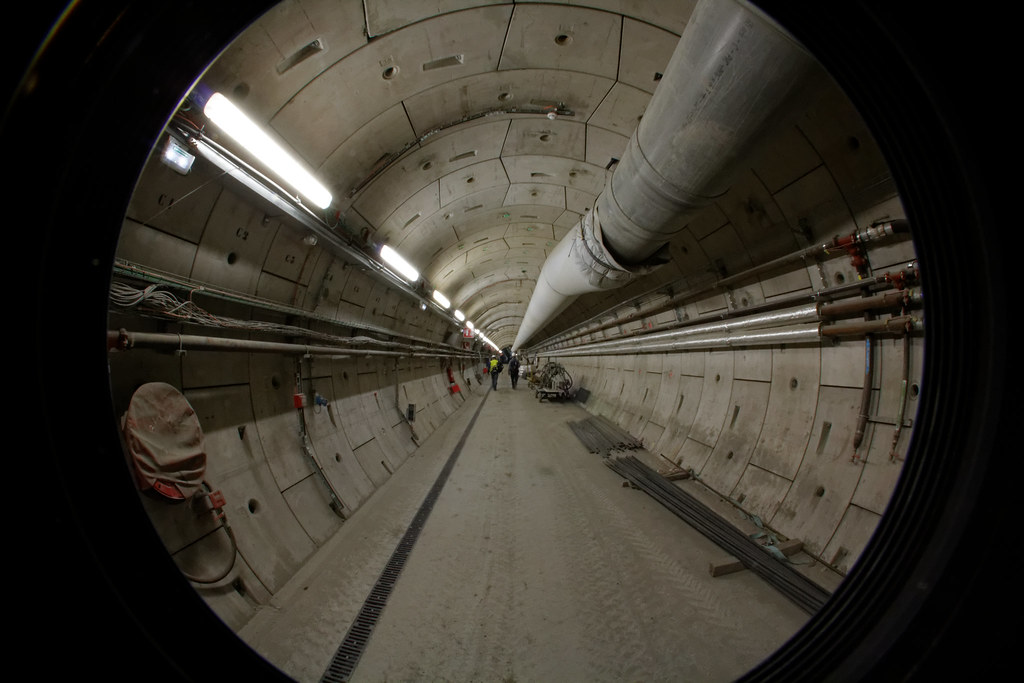
The final phase of the technical review of Cigéo was completed on July 8, 2025. In its assessment regarding post-closure safety of the repository, the French Nuclear Safety and Radiation Protection Authority (ASNR) concluded that the safety level is satisfactory and compliant at this stage of the project. The French National Agency for Radioactive Waste Management (Andra) has made several commitments in response to points of concern highlighted by the Authority. These will be reassessed later at key milestones in the project.
The technical review of the application for authorization to create (DAC) Cigéo was conducted in three stages. The first, dealing with input data for design and safety assessment, was completed in June 2024. The second, focused on operational safety of both surface and underground facilities, was concluded in February 2025. The third and final stage, completed on July 8, 2025, addressed “post-closure safety assessment.”
Following several months of expertise by the Directorate for Research and Environmental Assessment within ASNR, and after the opinion of the Standing Advisory Group of Experts for Waste (GPD), it was concluded that “Cigéo’s post-closure safety demonstration is at a level consistent with expectations for a repository creation license application, taking into account the commitments made by Andra and subject to the consideration of the remarks issued by the GPD.”
In mid-November, ASNR will issue a final opinion covering the entire Cigéo technical review. According to Andra’s schedule, Cigéo is still planned to be commissioned by 2050.
Exploring multiple scenarios
As part of its post-closure safety assessment of Cigéo, Andra explored several scenarios, considering risks that could affect the long-term geological repository (such as earthquakes) as well as uncertainties related to the performance of repository components (premature waste package degradation, faulty seals, etc.).
Under normal conditions, ASNR emphasized “a good containment capacity of the disposal system,” while recommending that studies continue, particularly regarding the hydraulic properties of the host geological layer (Callovo-Oxfordian clay). Altered scenarios—for example, a cell collapse during the operational phase—do not result in health or environmental impacts significantly different from those under normal conditions.
Special attention is nevertheless required in the case of an undetected fault in the disposal zone for long-lived intermediate-level waste (ILW-LL, moyenne activité à vie longue, MA-VL) or in the event of inadvertent human intrusion.
“Considering all these elements, the disposal system, in the chosen design, appears robust with respect to risks and uncertainties linked to its evolution. Assessments of environmental impacts, both radiological and chemical, as well as chemical health impacts, conclude at very low levels,” the Authority explained.
Additional requirements
Andra is expected to soon provide more detailed information on specific reservations expressed by the Authority and the Standing Advisory Group.
-
First, Andra has committed to include and assess the impact on long-term safety of a third scenario called “abandonment of the repository” during the operational phase and before closure. This had been requested as part of societal concerns.
-
Second, the Agency must continue studies on the risk of criticality (uncontrolled chain reactions in fissile materials) in the long-term storage of spent fuel. This requires further justification of the envelope model considered by Andra to manage this risk.
-
Third, Andra must provide stronger arguments for certain optimization choices in repository design, particularly “the location of the ILW-LL disposal zone relative to surface-to-underground connections (LSF), as well as the number and positioning of gallery seals in the selected design,” according to the GPD.
Milestone follow-ups
All points raised by the Authority and the Standing Advisory Group—including those from earlier phases (detailed knowledge of the host rock, fire response, bituminized waste, etc.)—will be examined later during scheduled milestones in the Cigéo project.
During the pilot industrial phase, which will span around thirty years, the additional studies and reinforcements required will be reassessed at multiple stages, such as the beginning of excavation or the construction of the first disposal cell. ■